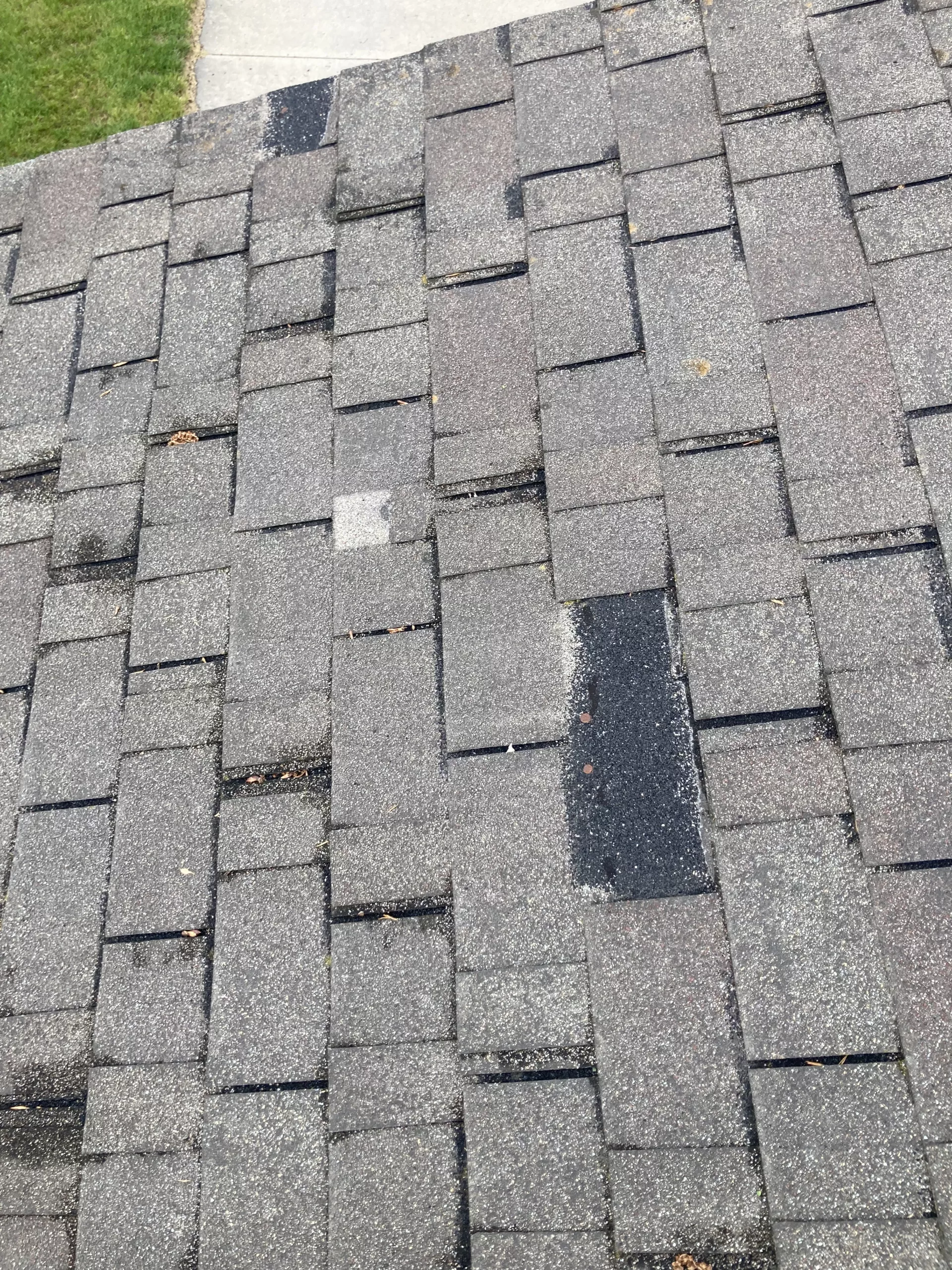
Shingle Blew Off Your Roof? Why It’s Usually a Sign of Bigger Problems (And What to Do Next)
A single shingle blowing off is almost never an isolated, “one-and-done” event. It is a visible symptom of an underlying roof-system weakness that, if left unaddressed, almost always leads to larger (and far more expensive) damage. At Hernandez KD Construction, we explain this to every homeowner because understanding the “why” helps you make a smart, long-term decision instead of a quick patch that fails again next storm.
1. How Asphalt Shingles Are Engineered to Stay On
Modern 3-tab or architectural shingles are held down by two systems working together:
- Mechanical fasteners (usually 4–6 nails per shingle, driven into the correct nailing zone).
- Factory-applied adhesive sealant strips that melt and bond the shingle above it during the first hot days after installation.
If either system is compromised, wind can lift the tab and peel the shingle upward like a can opener. A properly installed roof in good condition can withstand sustained winds of 110–130 mph (depending on the shingle rating). When a single shingle leaves in a much lighter wind (even 40–60 mph), something in the system has already failed.
2. The Most Common Root Causes (Multiple Angles)
We see these patterns repeatedly on Iowa City and surrounding roofs:
Installation or Manufacturing Issues (often hidden until the first strong wind)
- Nails missing the proper nailing zone, driven too high, or only 3 nails used instead of 4–6.
- Shingles installed in temperatures below 40 °F, so the sealant strips never fully activated.
- Underlayment or ice-and-water shield not properly lapped, allowing the deck to flex and break the nail hold.
- Manufacturing defect in the sealant strip itself (rare, but covered by most warranties).
Age & Weathering Degradation
- After 10–15 years the sealant strips dry out, become brittle, and lose their stickiness.
- Granules wear off, exposing the asphalt to UV; the shingle becomes stiff and cracks at the nail line.
- Repeated thermal cycling (Iowa’s extreme temperature swings) fatigues the material long before the “25-year” label expires.
Underlying Roof-System Problems
- Poor attic ventilation → excessive heat (often 140–160 °F in summer) softens and then hardens the sealant strips prematurely.
- Moisture trapped in the deck → plywood or OSB swells, loosens nails, and creates a “springboard” effect that pops shingles.
- Previous unreported storm damage → one shingle may have been the first to go; the rest are now weakened and ready to follow.
- Flashing or penetration failures (chimneys, vents, skylights) → water has been wicking under multiple courses, softening the adhesive for an entire section.
Localized Mechanical Damage
- A tree branch, hail impact, or foot traffic from a previous repair that cracked the shingle but didn’t dislodge it until wind finished the job.
3. Why One Missing Shingle Signals a Bigger Problem
- Water intrusion pathway: Even one missing shingle exposes the underlayment. A single heavy rain can drive gallons of water into the attic, causing stained ceilings, mold, insulation damage, and eventual deck rot. The damage you see inside is usually only 10–20 % of what’s happening in the attic.
- Domino (cascade) effect: The shingles on either side and above now have less wind resistance. The next gust can lift two or three more, turning a $300 repair into a $3,000–$8,000 section replacement.
- Warranty & insurance implications: Most shingle manufacturers require a full-roof inspection to honor the warranty. Insurance companies often classify repeated single-shingle losses as “wear and tear” rather than “wind damage” unless the entire roof is evaluated.
- Safety & structural risk: A compromised roof deck can fail under snow load or during a future storm, creating a much larger liability.
In short, the roof is telling you it is no longer performing as a unified, sealed system.
4. What Hernandez KD Construction Recommends Instead of a DIY Patch
- Do not climb the roof yourself — especially after wind. Ladders and wet or damaged shingles are a leading cause of falls.
- Call for a professional inspection (we offer free wind-damage assessments in our service area). A licensed roofer will:
- Check the entire roof plane, not just the missing spot.
- Inspect the decking for soft spots or water stains from underneath.
- Evaluate ventilation, flashing, and underlayment.
- Document everything for your insurance claim if applicable.
- Repair vs. replace decision is based on age, overall condition, and number of layers. Replacing just one shingle almost always leads to color mismatch and future failures; a full overlay or tear-off is frequently the more economical long-term choice.
Bottom Line
A blown-off shingle is the roof’s version of the “check engine” light. Ignoring it almost always costs more money and creates more headaches down the road. At Hernandez KD Construction we’ve replaced thousands of roofs across eastern Iowa, and the homes that fare best are the ones whose owners treat that first loose shingle as an early warning rather than a minor annoyance.
If you’re dealing with a missing shingle right now, contact us today. We’ll give you an honest assessment, explain your options in plain English, and help you protect your home and your wallet for the long haul.